Showing posts with label fantasy. Show all posts

Monday, September 09, 2013

Mistborn-Book Review

Mistborn: The Final Empire (Mistborn, #1)Mistborn: The Final Empire by Brandon Sanderson
My rating: 4 of 5 stars

I don't like to read fantasy. There I said it. I think a majority of the books labeled fantasy are dreck or are blatent rip offs of the Lord of the Rings. Every once in a while something will come along and I will pick it up for whatever reason and be pleasently surprised (GoT, NotW, first couple of WoT). Add Mistborn to the list. It has the chosen one cliche that pretty much all fantasy has, but it kind of puts a spin on it. The story was completely original, as far as I know, with its use of alomancy and the other thing that Terrismen can do that looks just as hard to pronounce as it is to spell. I see that there are two sequels of increasing length, but the story in this book wraps itself up in a nice tight package with a little bow. I can see where the next book would come from but it isn't a you have to read the whole series after reading the first book. I might or I might not. I have heard this described as postapocolyptic high fantasy and I think that is an apt description.

I would recommend this to people who like fantasy and even to people on the fense about it. It does take about 50-100 pages to really get into so be aware that it is a slow starter. I don't think it inclines itself more to women or men. Safe for kids that are okay with reading about violence.

Should I read the second book?

View all my reviews

Monday, September 24, 2012

Among Others- Book Review


Among Others, by Jo Walton, is a hard book to describe.  I guess the easiest way is to say that it is the winner of both the Nebula and the Hugo awards.  I don't know if it is deserving of the award as I have not read the other nominees as of this writing.  It is very interesting and it is in a diary type format, but I think the best way to describe it is as a coming of age story...for girls.  It has fairies and boys and father issues; yep, definitely a coming of age story for girls. 

Plot-  We meet young Mor on an adventure with her twin and then we are transported to a future where Mor is alone and her sister is dead.  Mor is leaving the Magical Welsh countryside and is stuck in a very unmagical boarding school.  It is kind of like Harry Potter in reverse.  Along the way we get to hear about all the wonderful science fiction and fantasy books that she is reading, some(most) of which, we still haven't read.

Characters-  I don't know how much to say here as I don't want to ruin anyone elses raw interpretation of the book.  Finish the book and then email me and we can talk about Mor.  Mor is really the only developed character.  Mor sees the other characters as fulfilling roles and they aren't established beyond these roles, this works as the book is a diary. 

Overall-  The book left me conflicted.  It has some action I guess, but that is always secondary.  It is more of an exploration of Mor and her coming of age story.  Thankfully the writing is good and it is very easy to be consumed into Mor's world.  I should have known it wasn't going to be a normal story as the narrator tells someone along the way that he is looking at things as if they were a story and that stuff doesn't happen in real life.  I was not, however, satisfied with the ending. 

I am not sure who to recommend this book to.  I am letting my 11 year old read it, knowing that there are some adult situations in the book and talk of sex, pregnancy, abortion, incest, and homosexuality.  She knows about all these things, but they are presented a bit differently in this book than what she may be used to and that we may discuss afterwards.  it was good, but I don't know if it was great. 

Monday, February 27, 2012

MogWorld-Yahtzee Croshaw


Yahtzee Croshaw sets out to create a fantasy novel that takes place in the world of an MMORPG(massively multiplayer online role-playing game, think World of Warcraft) from the perspective of NPCs(non player characters).  He succeeds in doing this and in telling a pretty good story along the way. 
Jim is the hero, no scratch that, the protagonist of the story.  He is dead, but he got better.  He is accompanied by Meryle and Thaddeus (both also dead, but got better).  Jim pretty much wants to find out how to get dead again and stay that way, but something has happened to the world and for the last 15 years, anytime someone dies, they get a new body at the nearest church (except for Jim and company, as they died pre “infusion”).  This happening was called the “infusion” and it coincided with a lot of people all of a sudden turning to adventurers and setting out on the adventurer’s trail. 
This book is full of witty dialogue and humorously pokes fun of its MMORPG/fantasy source material.  Croshaw develops the characters so that you actually care about NPCs, that in itself is impressive.  It reads lightening quick and whenever it is in danger of slowing down, “Slippery John” shows up to speed things back up.  You don’t have to play online role-playing games to enjoy this book, I don’t.  A passing knowledge of the genre would be all that was necessary.  If you think you want to read it but are unfamiliar with role-playing games.  Pick any game and play it for half an hour and you should be set.  I would put this one at 14 and up age wise.  I think anyone can enjoy it. 

Tuesday, February 21, 2012

1Q84 by Haruki Murakami

The name is punny.  Get it, because the word for the number nine in Japanese is pronounced “Q.”  It doesn’t really have much to do with Orwell’s 1984 though, so I am not sure why he went with that title.  It may had made more sense to use a different but adjacent year to avoid comparisons.  The title, although punny, is just one example of poor forethought on this book though. 
I generally love Murakami’s books.  Well not including the last three.  Kafka on the shore wasn’t horrible, but it just came off as completely pretentious.  What I Talk About When I Talk About Running was completely pretentious and not very enjoyable at all.  I will summarize that one.  Murakami is better than you and knows more than doctors, when he tries hard he can do anything including running marathons while battling pneumonia and hooked up to a respirator after having both lungs removed (yeah he can even have pneumonia with both lungs removed).  Wait this is a review for 1Q84. 
This book is a hot mess.  Did Murakami edit this himself; maybe the day after he wrote it.  This was supposed to be his opus and I guess no one wanted to tell him that his signature piece was deeply flawed.  Well onto the flaws I guess.
  1. The translation sucks.  It is translated by Jay Rubin and Philip Gabriel.  The fact that it took two people to translate it says a lot to me.  Gabriel translated Kafka on the Shore, which I also thought had problems.  He seems to do direct translation of puns and idioms.  Rubin has translated my favorite Murakami books, so maybe he wasn’t too involved. 
  1. The book was too long.  For fun, I thought I would look for the longest book on my Kindle.  Oh look there is the Count of Monte Cristo that has to be it, right?  Nope, a bit further down beating it by like three dots, was 1Q84.  Not that long books aren’t good.  The Stand is a favorite and I enjoyed the heck out of the Count of Monte Cristo.  But this book has a tendency to repeat the same things over and over.  I get it, Aomame’s face looks scary when she is angry and Fuka Eri talks funny.  Please stop hitting me over the head with it. 
  1. There is no climax.  As usual, in a Murakami story, several of the characters do, but the story just never hits a high point.  I think any part that could have been a high point is weighed down with over philosophizing and self actualization.  Tengo and Aomame meeting should have been huge, but it just kind of sputters.  Aomame and the leader should have been great but apparently everyone in Japan talks in riddles and no one asks direct questions.  Either way, What felt like buildup towards a climax, never really climaxes.  We only get halfway up that hill before Murakami decides to take us around the long way. 
  1. Unresolved plot threads.  This story develops characters and makes them central to the story, until they aren’t and then it abandon’s them to never be seen or heard from again.  At the end, you hardly no more about anything than you did at the end.  What happens to those two Sakigake guys, the dowager, Fuka Eri, or even the little people. 
  1. Pedophilia.  Murakami has danced around this one in the past.  I am looking at you Wind up Bird.  Kafka has a younger man/older woman dynamic that society seems to find more acceptable, but 1Q84 has men sleeping with underage girls all over the place.  It is explained away but comes across as excuses so that Murakami could include these scenes that he obviously has always wanted to write.  But hey Tengo was paralyzed, so that makes it okay.  Not to mention that someone slipped Aomame a mickey, or it at least seemed that way. 
  1. Tengo is superman.  Tengo is perfect.  He can cook, he is clean, he is a brilliant mathematician and teacher, he lives frugally, he doesn’t watch TV, he is excellent at Judo, he is a great writer, he is a stud that woo anything female, he is an excellent musician that can learn an instrument in a week and then play complicated pieces of music at a concert the following week to great acclaim.  All this and the whole time you are reading him, he comes off as mildly retarded.  The character is completely unrealistic.  Aomame and Fuka Eri seem to be fantasies of what Murakami thinks the perfect women would be. 
Overall-This book was in serious need of an editor and took over a month and a half for me to read. It would often put me to sleep and at one point I just started scanning past paragraphs of inner dialogue at a time.  There are at least two points when the perspective of the novel changes mid chapter, which pulled me right out of the book.  Is there an interesting book in here, maybe, but you would have to go after what we were presented with an axe to find it.  Any of the flaws I found in of themselves wouldn’t completely ruin a book, but put them together and I find it impossible to recommend this book.  It felt like a waste of the large amount of time that I spent reading it.  Don’t read this book.  Read Wind Up Bird Chronicles thrice or Norwegian Wood four to five times instead.  This one sucked. 

Monday, November 07, 2011

The Name of the Wind

A few months back, NPR had their list of top 100 science fiction and fantasy books as voted on by the public. The top 20 was riddled with the usual suspects.  I had read most of the books and at the very least seen the movies to the rest.  Well, except for one;  The Name of the Wind.  I had never heard of the author or the book.  I mean, I go to a book club once a month for science fiction and fantasy and no one there had ever heard of this book.  How the heck did it get on the list.  The only conclusion that I could come to was that everyone that had read the book had voted for it.

This is a recent book and the first in the series.  I believe the series itself is what was nominated.  This adds to the intrigue as the third book has not even been released.  The second book was only recently released.  So I tracked down a copy of the book and gave it a read.

Plot-  It doesn't look like it is a "boy who would become king" story.  In fact, if the series name is an indicator, it is a "boy that would kill the king story."  It follows the story of Kvothe as he is telling it to the chronicler, so the truth behind the stories can be revealed.  There are many fantasy tropes here and they are handled well for the most part.  The story meanders a bit in places and poor Kvothe just can't catch a break.

Characters-There are only two characters that matter in this story; Kvothe and the girl.  The girl is an Enigma and although you get several names for her, the reader is never even given her real name.  Kvothe is almost too perfect though.  He is extremely smart, talented, and witty.  Girls want him and guys want to be him.  If it weren't for bad luck, the character would have no depth at all.  Despite is extreme intelligence, he seems to lack any sense at all.

Overall, it isn't a bad story.  I was upset to find out that the second book just came out and the third (final?) book isn't out.  It only took 4 years between books, so, I am not sure if it is worth reading the first two and having to wait a few years for the final installment.  If it even is the final installment.  While good, I am not sure it warrants a place on the top 20, or at least not on the merits of the first book alone.  If you like fantasy, you should enjoy this book quite a bit.  If you don't like fantasy due to repeating tropes, this has some, but not as many as others.  Safe for everyone.  My 10 year old is reading it.  

Monday, October 24, 2011

Your Highness (2011)


You know, I thought Your Highness would be funny, and would be a rather stupid fantasy movie.  Turned out it was only a little funny, but managed to be a pretty decent fantasy movie.  Who knew.  Zooey wasn’t even that annoying and you get to see Natalie Portman in a metal bikini. 
The Humor is rather vulgar though.  I might have thought it funnier about 15-20 years ago, but a lot of it just made me feel uncomfortable.  I would say that the funniest part was the hanging at the very beginning. 
It isn’t a movie for kids and most women (any woman reading this blog are obviously excluded as they may tolerate it more, but be warned) aren’t really going to care for the crude humor. 

Monday, July 25, 2011

Jonathan Strange and Mr. Norrell- spoiler free review

In Susanna Clarke's novel Jonathan Strange and Mr. Norrell takes place in an England were magic has all but faded away.  Magicians no longer practice magic, but only study people that did.  Two men are prophesied to bring back English Magic. 

This book takes place in early 19th century England only that England has a rich heritage of magic that culminated in the rule of the Raven King in Northern England.  Clarke does an amazing job of populating the landscape with her magical history and varied, interesting characters.  The story creeps slowly forward like a snowball picking up momentum until you are hit with an avalanche.  I personally think that it starts picking up with the introduction of Jonathan Strange.  I guess you could call me a Strangite. 

The excellent characters drive the story.  This book is not so much about the revival of English magic as it is the relationship of Jonathan Strange and Mr. Norrell (excellent title there Susanna).  Seemingly secondary characters also play very large roles in the motivations of the main characters if not stepping up for their own share of the action. 

While the subject matter would put this book squarely in the fantasy genre, it is unlike any fantasy that I have read before.  It fits the fantasy genre in about the same way that The Prestige was science fiction.  It adopted the concepts, but told a different type of story that only loosely holds to genre norms. 

It was an excellent novel and I have found myself unable to recommend it to enough people.  It is a bit on the long side; coming in at just over 1,000 pages, but once you get into it the pages just seem to melt away.  Almost as if by magic.

Monday, April 11, 2011

Difference between Science Fiction and Fantasy

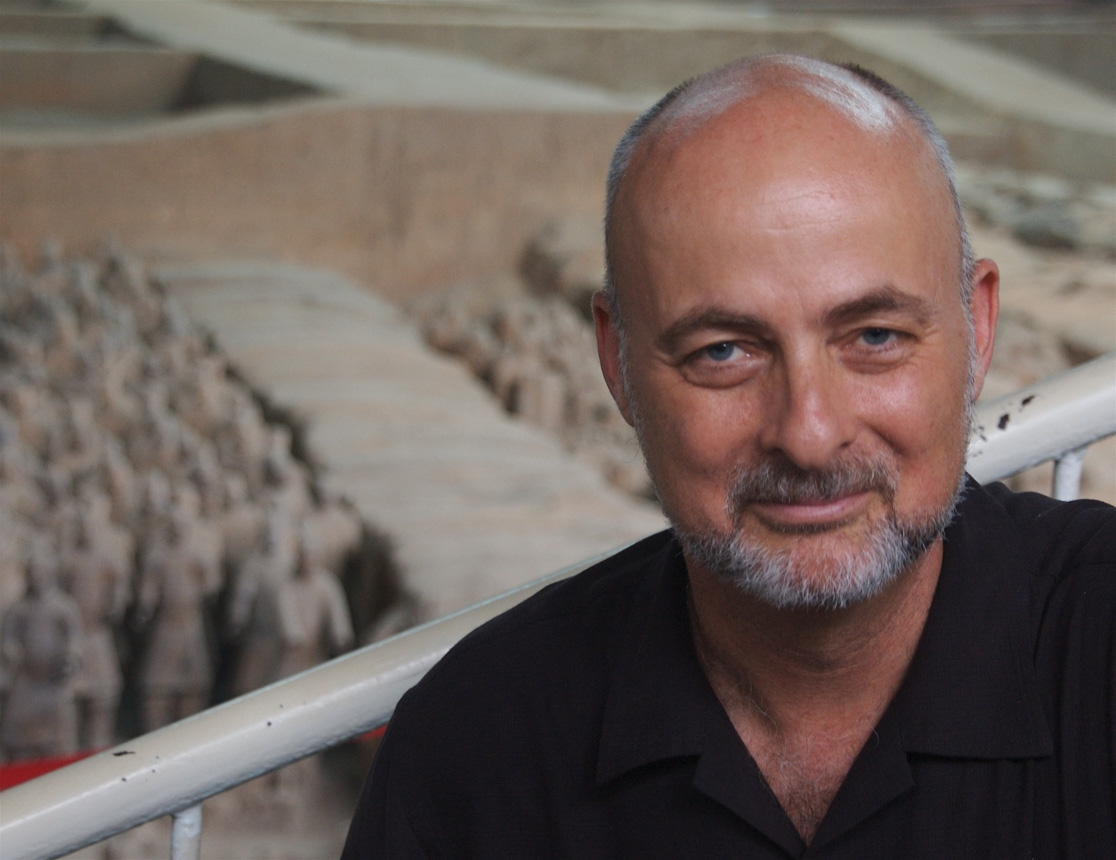
David Brin has posted an article over at the Institute for Ethics and Emerging Technologies that aims to tackle the difference between Fantasy and Science Fiction.  This is a pretty unique take on things.  It is well worth the 5 minutes it takes to read (unless you sucked into the comments). 

Can anyone back him up or prove him wrong?  let me know in the comments. 

Thursday, March 03, 2011

No Dancing, By George

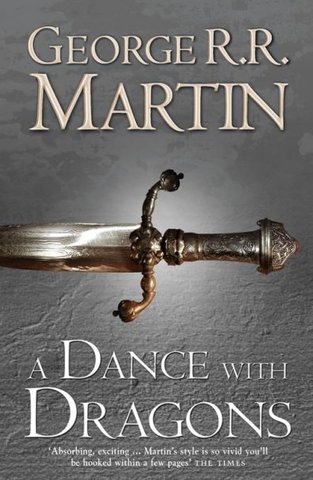
There must be pigs flying over a frosty ground in Hades today, because George RR Martinannounced that his long-awaited book A Dance With Dragons will be published in July of this year, though “long-awaited” may be too kind of an understatement, I suppose. For the uninitiated, Martin is the author of one of the more popular fantasy series of recent years A Song of Ice and Fire. This forthcoming book is the fifth in the series and has been six years in the writing.

With many updates from the author claiming that he was “almost done” and that it was “coming together” and hopeful predicted publication dates of 2008, 2009 and 2010 that all had less substance than any spectre that might haunt one of his characters, it’s a little hard to get too excited. Even though the announcement is “official” now, I’m still skeptical.

I guess I’ll believe it when I see it. But then again, when I see it, I won’t buy it.

A Dance With Dragons

Now don’t get me wrong – the series has been great and the first book Game of Thrones is maybe the best fantasy book I’ve read. Period. But let’s look at the series’ publication record. The first book came out in 1996, the second in 1998, and the third in 2000. Pretty good , right? Two years a pop. Well, the fourth installment came out in 2005 after what seemed an interminable wait. Forward to now and that means that for fans of the series there’s been ONLY ONE BOOK IN MORE THAN A DECADE! Part of me recommends this series more than anything I’ve read in a long time and the another part of me is thinking, “Enter at your own risk!” Arrrrgh!

I don’t think I’m the only one to feel a little jilted by Martin. If you go to his Amazon author page, one of the top threads is “Screw You GRR Martin!” Readers and fans are dismayed because Martin seems to have ample time to travel the world attending convention after convention, collaborate with HBO to make a television series out of the material, as well as produce other works – seemingly do everything except the one thing that created his fanbase in the first place. I will be very curious to see how it sells or whether people have cooled to it. I certainly have – though I have to admit I’m really excited to see the HBO version of A Game of Thrones – so how’s that for double-standarding?

A Game of Thrones

Martin has been stung by opinions like mine (which I’m sure he been barraged by) because he claims as a writer he wants to pursue his passion and produce the best material he can and asserts that can’t be expected to be done on a timetable. I get that – I really do. But that doesn’t mean I have to like it (or maybe more importantly, buy into it). It’s a funny thing, the relationship between an author and their fans, isn’t it? I wonder if people were like this with Stephen King and the 6 year hiatuses between books in the middle ofThe Dark Tower series. I’m sure they were. I just came to the series after it was completed so I didn’t care.

And in a way that’s what I plan to do with A Song of Ice and Fire. After enduring two 5+ year waits, I think I’m going to keep my personal curiosity bottled up until the end of the series (which should be book 7 or 8) is in sight. Because let’s face it, to really enjoy it I’m going to have to start over and I’m only going to do that sort of reboot once.

Keep ‘em coming, George.

Wednesday, February 16, 2011

John Scalzi Weighs In

American science fiction author John Scalzi.Image via Wikipedia
John Scalzi has weighed in over at his AMC blog on the ongoing debate of Science Fiction vs. Fantasy or where the line is drawn between the two.  His original point of contention was the use of the term Science Fantasy to describe works that aren't particularly science based.  He makes a poit that all science fiction can be classified under the broader genre of fantasy. 

"To engage in further nitpicking, everything you can possibly label as "science fiction" is in fact just a subset of a larger genre, which is correctly called "fantasy." This is because science fiction -- along with supernatural horror, alternate history, superhero lit, and the elves-and-orcs swashbuckling typically labeled "fantasy" -- is fundamentally fantastic. Which is to say, it involves imaginative conceptualizing, does not restrain itself according what is currently known, and speculates about the nature of worlds and conditions that do not exist in reality. It may gall science-fiction fans to think of their genre as a subset of fantasy, but it is, so calling a film "science fantasy" is in most ways redundant."

I take issue with the words "in my opinion" being ommited here.  My opinion is that words take on new meanings as time progresses.  Awful is great example of this.  Originally it meant full of awe, but is now a term of disgust.  So too went both the terms Science Fiction and Fantasy.  I will go so far as to say that by Miriam Webster's definition of fantasy, "the free play of creative imagination," all good fiction would fall under the fantasy category.  I would say that the definition has changed and will probably continue to do so.  Currently, the fantasy genre represents worlds where magic exists.  With sub genres of lite, dark, and high popping up, I can only imagine ti changing further in the future.  The same could be said of science fiction. 

Scalzi does point out one thing that is at the base of this arguement.  Elitism.  Some science fiction fans don't want to be associated with "fantasy" or even some sub-genres of science fiction.  This is an attempt to give what they read more literary merit.  Tearing something down to make something else look bigger is nothing but an optical illusion.  If what you are reading is good, it will shine on its own regardless of genre. 


Enhanced by Zemanta

Monday, February 07, 2011

Are Fantasy Readers Dumber

This is a comment on a thread that I made at A Dribble of Ink on the question of "are fantasy readers dumber than SF readers?"   

I wouldn’t say that the readers are dumber. They enjoy different types of stories. The fact that there is a lot of overlap in the fandom, shows that the stories are not too dissimilar. I perceive that a majority of SF readers also read fantasy, but that the percentage of fantasy readers that cross over into SF is significantly lower. I won’t say that one story focuses on story, characters, or world building more than the other because I can come up with titles that are for and against for both genres. I will say that good SF does seem to be more about an overreaching idea than most fantasy I have read.


I tend to enjoy science fiction more. I also tend to learn more from reading science fiction. Some science fiction builds from current minor discoveries and builds on them. I think that SF would be more of an academic read for that reason. Anyone that has read a Neal Stephenson novel can attest to the pages upon pages that he goes through discussing the science or math that he is using as a plot point. It can be sometimes off putting to me as well. I am not saying that fantasy is not academic and can’t be learned from, but, in my reading experience, science fiction tends to do this a lot more.

In defense of Ender’s Game; I believe OSC has gone on record about the ansible and FTL stating that he didn’t have the science and didn’t want to explain them with bad science. As they were needed to move the plot along and not put in as a Deus Ex Machina at the very end, this is excusable to me. Ender’s Game was all about the idea of the Battle School.

Someone mentioned WoT. I hope that no other writer tries to write so many characters into a series ever again. That is complex in a bad way. It has almost turned me off of serials.

Tuesday, February 01, 2011

His Majesty's Dragon-Spoiler Free Book Review

His Majesty's Dragon (Temeraire, Book 1)
*Review pertains to the Audiobook version*
Have you ever wondered how the Napoleonic Wars would be different had dragons been involved?  If so, you should probably check out this book.  You should also check it out if you thought the first sentence sounded interesting. 

The plot- A British ship captain captures a dragon egg from a French ship.  This egg was on its way to Napoleon himself.  Dragons seem to bond with their handlers immediately out of the shell and the egg is hatching.  Whichever sailor bonds with the dragon will be conscripted into the Airforce and discharged from the Navy.  Being a Dragon handler is for life and usually means forsaking family and friends.  Got your interest piqued yet?

Characters-  Characters are the week point of this book as they all seem rather stereotypical.  You have an English Gentleman, a Rake, a woman that is as good as any man and therefore becomes a love interest.  There is a bit of a "chosen one" in the novel as well.  I would also be offended if I were a 19th century airman (oh wait, they didn't exist, nevermind). 

This is a series, an uncompleted series as of writing, so be warned.  I doubt it will go "wheel of time," but there is always a risk.  Novik does a pretty good job on this book.  While the characters generally don't surprise you with their behavior or grow much, this was her freshman novel.  Very little questionable material is present, so the novel should be safe for teen readers and up. 

Tuesday, December 07, 2010

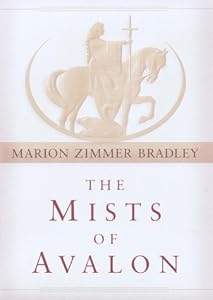
Mists of Avalon

Oh my goodness, this was a long book.   Although the word epic has become cliche, this story truly is epic as it takes place over a long period of time, it is long in itself, and it follows the legendary actions of the characters.  So, epic is fitting for this.

Let me tell you.  I missed the boat on this one.  Most people that didn't read it upon its release in 1982, read this in high school.  Not I.  I waited an extra 20 years so I could have some perspective.  In high school, I read Mary Stewarts take on the same legend.  Very good I would recommend it as well.  Currently, I am not huge on Fantasy.  I just don't get into it that much, maybe because of the cliches that Nick pointed out on a post several years ago.  I will pick some up from time to time, but always with concern.  I have been burnt by good fantasy and bad.  Considering the source material was well loved and 30 years old, I felt safe with this one. 

We all know what this story is about, it is an Arthurian Legend.  This book takes the point of view of Morgaine, Arthur's sister.  It is possibly the most widely accepted contemporary telling of the legend.  Marion Zimmer Bradley has not wowwed me in the past but this one is good. 

Plot-  It is King Arthur, we all know what is going to happen.  Or do we?  Bradley changes quite a bit.  She made it her own, dawg.  She took the frame of the legend and built her own creation on it. 

Characters-Halfway through the book I hated every single character.  The were well written, maybe a bit one dimensional, but I hated them.  A couple were redeemed later, but at one point I toyed with putting the book down because there was not one single redeaming character.  Overall it was good though.  I think the fact that she could make me despise the characters so much was because I had grown to care about them. 

Overall the book was good.  I have heard it called a feminist take on the subject and I partially agree with that.  It has strong women characters, but they are generally seen as evil or ignorant.  I think high school is about the right age to read this book, but I don't think older readers will be disappointed.  Subject matter and sexuality makes it unsuitable to a less mature audience. 

Enhanced by Zemanta

Tuesday, November 09, 2010

10 Science Fiction/Fantasy/Comic movies that should be made

This is a blogfest post for Ellie Garrett's Top 10 films they should have made. 

1. I will start with the ubsurd-Yeast Lords.  They were already filming scenes for this in the movie Gentleman Broncos, so why didn't they just film it to completion to be released as a two disc set on DVD.  Sure it would have been horrible, but in an Ed Wood, we totally know that it is horrible type way. 

2.  In 1985 Clint Eastwood should have played Wolverine.  Sure he is too tall, but so is Hugh.  Special effects sucked back then but they could have done it better than the origins movie. 


Armor (Daw science fiction)3.  Armor-  This little known John Steakley novel is Awesome military sci-fi.  I love this book.  After watching Terminator TSCC I will say that you cast Bryan Austin Green as the lead. 

4.  The Wheel of time-  Hey Hollywood, you sick of trilogies, then try out this on going series that will keep you filming for 10 years.  Great thing about these books is that you can cut away at them (especially in the later books) and the fans won't care in the least.  In fact, cut everyone but the top 10 characters. 

Ender's Game (Ender, Book 1)5.  Ender's Game-  Uncle Orson is very protective of his baby and has full creative control over the rights.  Hollywood, just do the movie the way he wants it done, it will be successful.

6.  I Am Legend-  Don't tell me that they have made this movie three times, because they haven't.  I would give this to a Japanese psych horror director, maybe the guy that did Audition. 

7.  Mists of Avalon-This would have to be a trilogy but the story is just so epic.  Not sure who could play the actors, but I am sure that Gary Oldman would make a great Kevin Harper.

8.  Predator:  Permanent Midnight- This is a great installment in the predator series and would work well as a stand alone movie. 

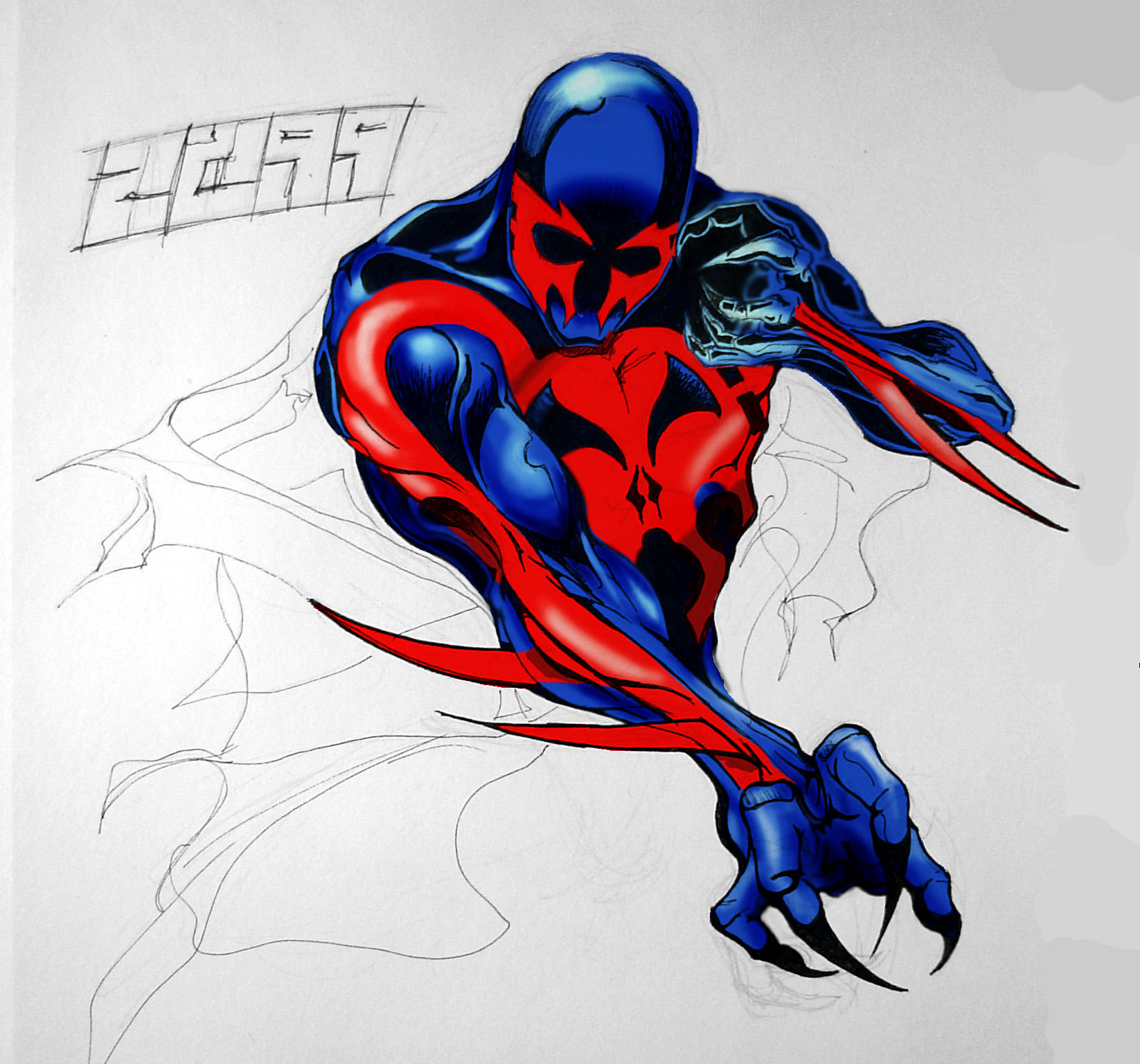
9.  Spiderman 2099-  Why remake/reboot the same old spiderman.  This future take on spederman is pretty awesome and could reinvigerate the franchize.  I pick Wilmer Valderrama to play Miguel.

10. Terminator:  TSCC-  Bring back the cast of this show and finish up the story line in one humdinger of a movie. 


Enhanced by Zemanta

Tuesday, October 26, 2010

My money where my mouth is...

Hey folks.  I complained a bit about fantasy cliches awhile back and apparently a lot of folks read about it.  There were a number of comments with a number of valid critiques. One or more of which suggested I try to write a fantasy novel.  Well, I'm actually going to attempt to write a fantasyish novel for nanowrimo. 

For those who don't know National Novel Writing Month is a fun, seat-of-your-pants approach to novel writing. Participants begin writing November 1. The goal is to write a 175-page (50,000-word) novel by midnight, November 30.

This my first year actually doing it and we'll see how close to 50,000 I get.  I've been working on an outline during October and it's getting down to crunch time. 

Here's my current novel info:

Title: The 7 Sainted Hollows

SETTING: Cyberpunk Fantasy.  Strongly influenced by comic books [American, European, Japaneses and Chinese], kung fu movies, Lovecraft, and hardboiled crime stories. At first I tried to create a genre label, but I don't think it really fits one aside from the broad category of speculative fiction. Structurally it'll probably be closest to contemporary fantasy.

PLOT/BLURB: I'm currently in the construction phase but here's my current blurb...

It has been nearly 50 years since Optimus was founded on the wasteland that was once Perry County, Tennessee. Destroyed by the Outer God cult - Starry Wisdom, their leaders - the Seven Sainted Hollows, worshippers of the Great Old One - Byssh Naga, servant of Nyarlathotep. Five Saints were imprisoned with Byssh Naga, One was killed. One is still free.

The remnants of those who saved the city haven't given up on finding the final Saint but have had no leads until now. A run-in with a town of Lovecraftian vampires and the acquisition of a strange device point to Starry Wisdom and a plot to free the Saints.

It will change as I work on it so... My profile/novel summary

So as you can see it is clearly a mix of cliche and non-cliche.  Cliches cannot completely be avoided without abandoning genre or decent adventure storytelling.  I an assure you I will do my best to avoid Fantasy, Urban Fantasy, and Contemporary Fantasy tropes/cliches. 

Wish me luck, or not, it's a free country. 

Nick.

Tuesday, September 28, 2010

Book Review: "Kraken" by China Mieville

When I finished the audiobook of China Mieville’s new novel “Kraken”, the first thing that went through my mind was was that it’s not too often that you come to the end of a book and think “I’ve never quite read anything like that before” – and it’s wonderful to realize that authors can still surprise and delight you.

Now I’m sure we can all agree that giant squids are awesome.  And I have always been fascinated by them.  Why?  Because they might be the last “monster” left on earth.  Smart, powerful, dangerous and “other” -- they’re not like you and me, these invertebrate behemoths of the deep.  So when this book popped up on some “if you liked that, you might like this...” algorithm, I knew that I had to give it a try.


Billy Harrow is a curator at London’s Natural History Museum and one day finds that his prize specimen -- a recently collected giant squid, indeed its entire tank full of preserving fluid -- has been stolen.  Who steals a giant squid and moreover how?  These questions lead Billy into a world hidden within our own -- one of magic, power, strange religions, its own police unit, and dangerous politics.  After the theft, things go from bad to worse, as it becomes alarmingly clear that the theft of the squid is central to an onrushing Apocalypse that threatens to wipe out all things.  The ensuing story is thoughtful, funny, scary, thrilling , and at times, oddly touching -- maybe the most bizarre whodunit I’ve ever read.

I’m sure that Mieville’s book will be compared to Neil Gaiman’s “Neverwhere” -- another novel that explores a world-within-a-world in London, but the book reminds me more of Neal Stephenson’s “Anathem”.  What makes this book so good to me is that like Stephenson, Mieville creates an incredibly realized world like nothing we’ve really seen and makes you believe in it and the fantastical characters that reside in it.  Mieville’s story has maybe a half-a-dozen ideas that are clever and powerful enough to power their own novels outright, but here are brought into service of this one.

The other thing that made this book an absolute joy to listen to was Mieville’s use of language.   He wielded grammar and vocabulary so deftly that it made me feel like English was my second language.  So much so, that in an unprecedented move, I am actually buying the physical book so that I can go back and re-read it sometime.

I don't believe in book-review grade-inflation, but easily five stars out of five.

Friday, July 23, 2010

Way of the Wolf

Way of the Wolf (The Vampire Earth, Book 1)Are you tired of the sparkling vampires of Twilight?  Do you want some vampires that you can be afraid of?  Way of the Wolf by E. E. Knight should take care of those two things in an entertaining quick read. 

This book follows the adventures of Dave Valentine as he becomes a wolf (a scout for a freedom fighting group) in a post apocolyptic world where vampires rule.  The vampires in question are actually alien beings that feed off of life aura.  They have not only infected our planet but through a use of a star gate like technology have invaded the universe.  There are some non evil Kurians that didn't go down the vampiric road that helps hummanity by awaking humanities more savage nature. 

This is the first novel in the Vampire Earth series and as so it is more concerned with world building and really only develops Valentine as a character.  It intentionally mixes science fiction and fantasy, giving fantasy aspects with science fiction explanations.   An example are the grogs.  They are your basic orc but Knight has them genetically created. 

It was a pretty good book and makes me want to read the others in the series.  This one isn't for the kiddies as the end of the book has to do with rape and prostitution.  Fantasy and Science Fiction fans should enjoy it.  Not sure about twilight fans as the vampires are not romanticised at all. 

Wednesday, June 30, 2010

Abraham Lincoln: Vampire Hunter

Abraham Lincoln: Vampire Hunter
This book had me with the cover.  I know, I know; don't judge a book by its cover.  Well I do.  Quite a bit, really.  And this cover sold me.  When I looked it up on the library website, I saw that it was available in audio and requested it immediately. 

I wasn't sure what I was expecting with this book.  I think I was expecting it to be really bad.  I am sure I wasn't expectiong what I got though.  This book is quite simply a biography of Abraham Lincoln. It really is.  A majority of the book is non fiction.  Strangely enough, vampires just kind of fell in to the open places in Lincoln's history.  It didn't feel forced.  Grahame-Smith did an excellent job with it.  I actually learned quite a bit from this book, which is strange because it is about fighting vampires. 

Monday, April 26, 2010

Traitor's Sun

Traitor's Sun (Darkover)
Traitor's Sun
Marion Zimmer Bradley
2000, Tor publishing

Traitor's Sun is a novel of Darkover and my first experience with both the Darkover Universe and Marion Zimmer Bradley.  Darkover intrigued me but the book ultimately fails.  Darkover seems to be a mix of Science Fiction and Fantasy.

This is a stand alone book, so you don't have to even be aware of other Darkover novels (there are quite a few) to understand the story.  It simply follows a senator of a collapsing, corrupt planetary federation as he flees to his homeworld of Darkover.  The King has just died and the federation are pulling out, but an ambitions captain is going to try for one last takeover.

Friday, September 01, 2006

Fantasy Cliches And Why I Want To Kill Them

So the title is a little harsh, but hey, harsh can be fun.

I played D&D as a kid, read Tolkien and a few others so I have some familiarity with the genre. I watched a lot of the fantasy movies, blah blah blah, so I have some kind of leg to stand on when I criticize the cliches. I do so because I would like to see more original ideas in the genre. The genre suffers from several problems, some innate to the genre and some due to the general hackery of fantasy writers. Now I am talking strictly about books written in a pseudohistoricaal medieval setting, not Harry Potter or any of the modern fantasy or vampire books. I'm talking typical Fantasy here. The kind with Frazetta covers, ya dig?

Now I warn you that I will sound like I am tearing apart the very basis of Fantasy and that I am not a fan. This isn't true. I am merely tired of the same old crap. I used to like the cliches, but how many near exact copies of Lord of the Rings and Conan can I take, come on.

Also, I expect most to say, "lighten up dude, it's just fantasy," in response to my dislike of the implications of the fantasy setting worldview. I am not trying to multiculturalize or legislate rules re: fantasy. I want a larger range of fantasy worlds. Y'all can keep writing the same old baloney, I just won't read it.

The following are several of the problems.

RACIAL DETERMINISM

Fantasy has this tendency to create races as living stereotypes. Now these stereotypes don't necessarily connect to real world stereotypes. I can't really match up dwarves or what-have-you to real ethnic groups. That is not my point really. My point is that its endorsement of stereotypical thinking.

This is all reinforced by the tendency to develop human-like structures to their societies. The demihumans (to steal from D&D) have a typical human sexual reproduction and family format. There has been a tendency to try and create an ecological niche as if there were at one time Cro-magnon elves, dwarves, goblins, orcs, etc all competing for the same resources in the stone age. They have their own cultures, societies, rules, etc. Once you make these magical races biological it creates a setting that seems to endorse a biological deterministic framework. Goblins are innately inferior because of their evil Goblin heritage/genes. Elves are innately superior (and coincidentaly quite Aryan in appearance) because of their Elven genes/lifespan/abilities. And I think that is where they go awry in multiple ways.

If you start to go biological you then need to really think out the world beyond all levels of frustration. To create a semi-realistic setting you have to walk through all of evolution on the planet and explain why Elves don't rule the world. Once you do that you have to think up reasons why different groups are innately evil and how they could have survived at all without some kind of kindness/cooperation within their group. From everything I have seen a society that is as cutthroat as the Goblin races are usually depicted would be out-competed by early man who was at least somewhat cooperative at the tribal level. The point is that you would have to recreate a pseudo-biological history of the entire planet. It's just too annoying.

My favorite method is to return to myth and to return to the general idea that these are magical creatures not biological. They don't have families or societies as we would understand them. They are creatures of magic and spirit and so embody ideas not real species. Like the Fae of Ireland they may reproduce by stealing kids and feeding them magical food under the hills. Stuff like that helps you avoid all the biological and ethical complications of a decent fantasy setting. This was very much inspired by the Hellboy comic book by Mike Mignola. He's bloody brilliant (as some denizen of Harry Potter might say).

And so in designing the setting you create a roughly Earth-like evolved planet with magic creeping in at the edges.

THE CHOSEN ONE SYNDROME & THE EPIC

The next major problem is the idea of the prophesied chosen one who will save the world from darkness. I am so utterly tired of the chosen one vs dark lord BS. Are we that short of ideas that the only plot to be redone in infinite variety is some kind of Tolkien + Jesus mish-mash? It is just so painfully, sickeningly done to death. What about the little stories about interesting characters in interesting fantasy settings? Fahfrd & The Gray Mouser by Fritz Leiber is a notable exception. They should be more interesting than me or the butcher down the corner, but does it always have to be about saving the whole of middle earth? Why this need for the epic in every single novel/series? Just laziness to me.

Back to this chosen one nonsense. In the real world there are no chosen one's who change the course of history. The exceptions are Jesus, Buddha, and other such major religious figures. By and large history is made by the mass movements of people with leaders that seem to know how to ride the crest of a movement. The leaders ARE NOT THE MOVEMENT. I do not want to read about another Jesus figure sans pacifism and compassion. It doesn't appeal to me and while it has its place within Fantasy it is not the only plot one could do. To me the chosen one syndrome encourages simplistic thinking about life. Simple is comforting, but wrong and unhelpful.

The chosen one is often a farmboy, who is secretly the long lost son of the king. Besides being a tired cliche I disagree with its implications. It implies that no one could possibly become a great man without some kind of genetic link to other great men, feeding the eugenics BS throughout Fantasy novels. Why can't the farmboy, merely be a farmboy who rises to greatness? (The exceptions is Conan, the Fantasy genre's self-made man.) Why does it have to turn out that he belonged to the ruling class all along? This leads to my next pet peeve...

AUTHORITY WORSHIP

Fantasy novels make certain entirely false assumptions about authority figures.

Firstly they depict rulers as either entirely enlightened, just, nearly holy rulers, or evil usurpers of the throne. They are very much wrapped up in the nobility and the justifications of the nobility.

Let's set some things straight. Kings and the like started out as bandit/warrior/Mafioso who basically ran a protection racket and made themselves rich off of that. That is the entire basis of "nobility." All this rightful king bloodline nonsense was cover for Machiavellian Mafioso politics. There is not one shred of decency or admirability in the Lords and Ladies. They generally starved the people to live in luxury and for that should never be praised in my book. They gave nominal protection, but the primary protection the people needed was from their own King or a competing King.

The wise gentle authority figure is pure fiction. Kings of the past are generally quite similar to dictators of the modern era, e.g., Saddam Hussein, Kim Jong Il, Stalin, Hitler, the Kings of the Middle East, "President" Musharraf, etc.

Do any of these strike you as similar to King Arthur? No? That's my point.

And so I merely wish Kings to be depicted as well rounded humans who were driven primarily by greed and power lust, but had a human familial side as well. They can vary character, but at their hearts they are all amorally ruthless when it comes to keeping themselves in power.

I can quite easily picture an adventurer type getting stuck between Machiavellian Kings, why is that so rare?

BOREDOM WITH EUROCENTRISM

I know the genre was born out of reinvention of the ancient European epic, but does it all have to be? I enjoy it and all, but I'd like to see more novels set in fantasy setting based on extrapolations upon Asian, Native American, and African cultures. Fantasy is a big what-if anyway. Why can't you imagine how A pseudo America would develop after a few more centuries of settled culture and technological advancement? Or a pseudoAfrica? All of these can create interesting imagery. Or you can try (and this is hard) to make up your own fantasy cultures from scratch. Start with maps, then how folks look, make up language and culture, clothes, food, animals, social structure, the way magic works, the whole kit & kaboodle. That sounds challenging!

Perhaps the problem is the fantasy audience. Perhaps they just want the Lord of the Rings re-told in slightly different ways over and over and over again.

I dunno.

Peace.

NF.